
How to Measure
Inside Mount Window Treatments
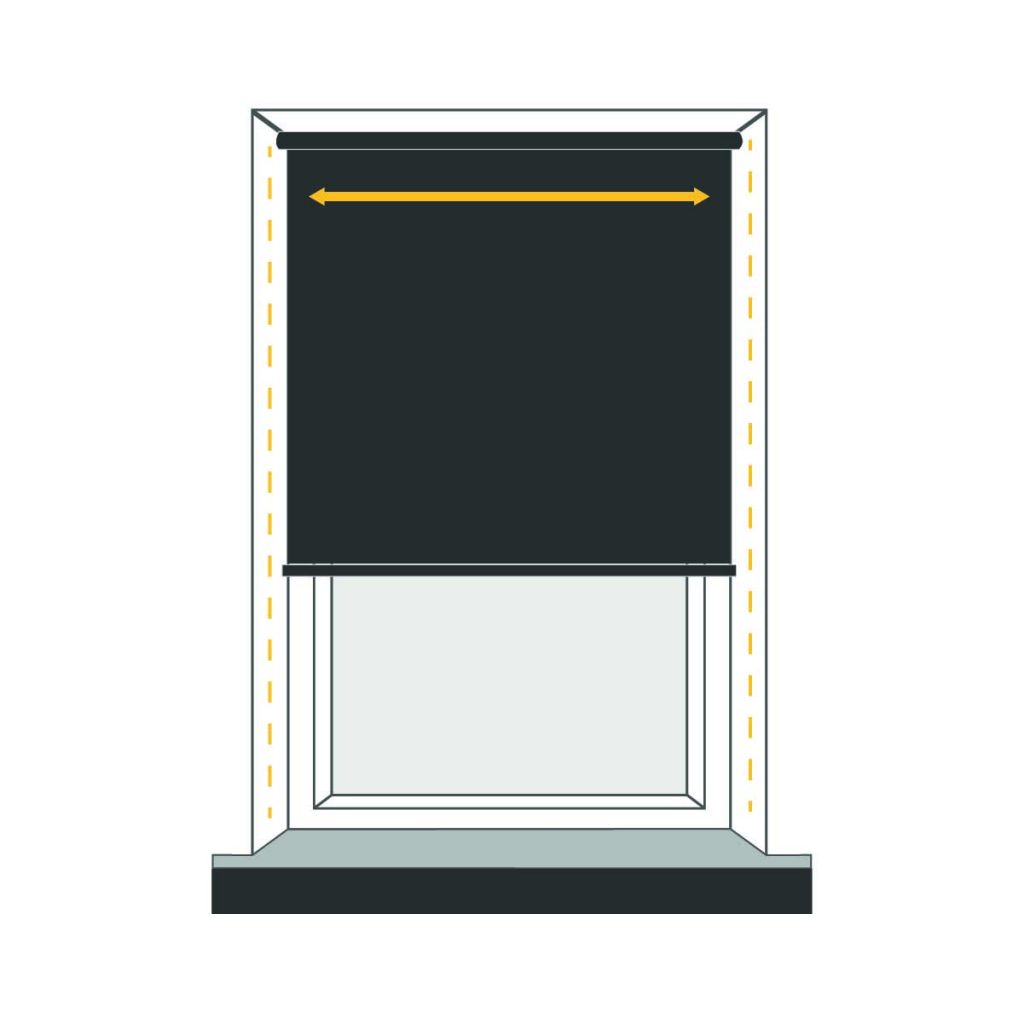
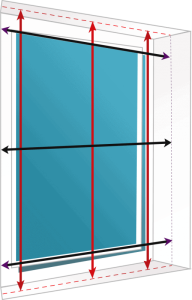
Measure the Width: Measure the inside of the window frame in three places: across the top, middle, and bottom. This is important because not all windows are perfectly uniform. Record the narrowest width of these three measurements to ensure the blinds will fit properly. Measure the depth of your window frame. You’ll need this measurement to ensure your window recess meets the minimum depth requirement for an inside mount. Refer to the Mounting Requirements section for the window treatment you’ve chosen to ensure your window meets the requirement for an inside mount.
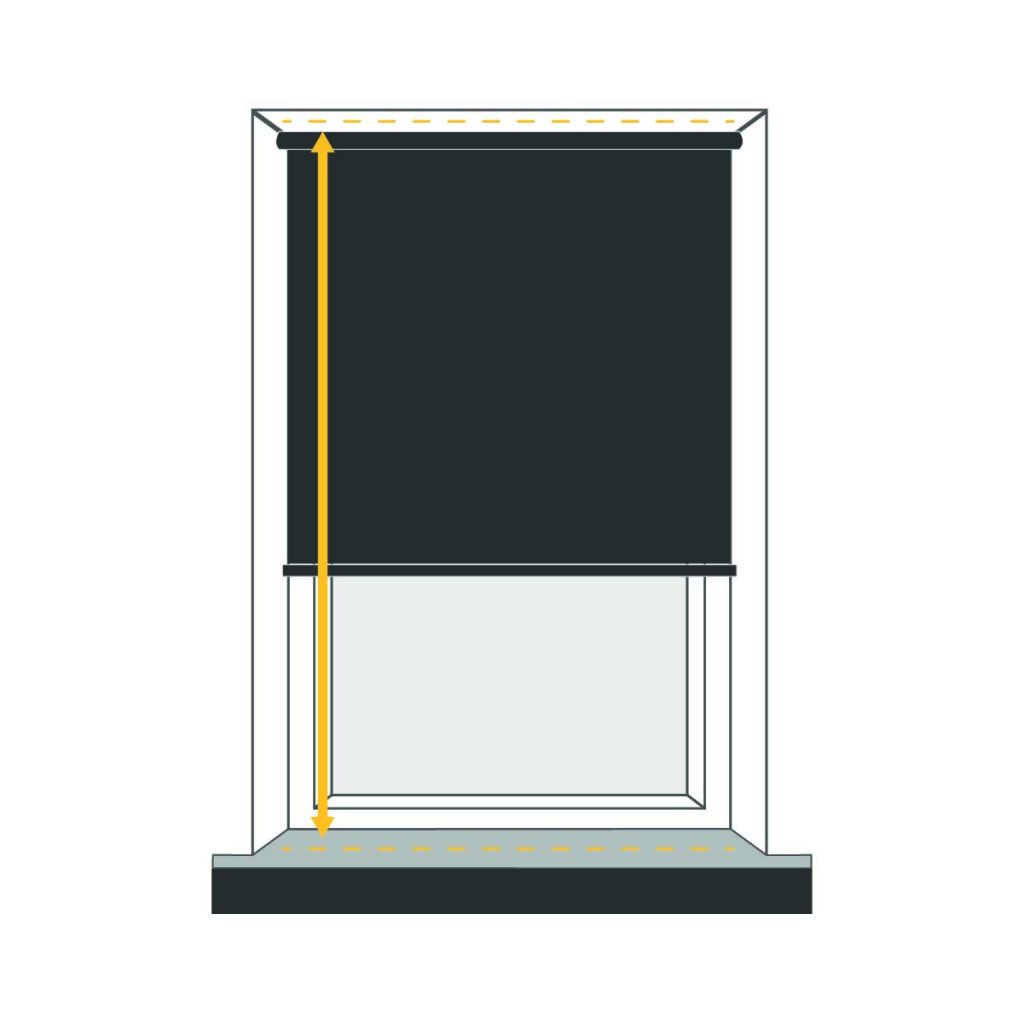
Measure the Height: Measure the height of the window frame at three points: the left side, middle, and right side. Document the longest of these three measurements to account for any variations in window height. Measure the width of your window at the top, middle, and bottom of your window opening and circle the narrowest measurement of the three – this will be the number you submit for your window’s width. For solar shades and vertical blinds, record the width at the top of the window only.
Measure the Depth:Measure the depth of the window frame. This is essential to determine how deep the blinds can be installed and ensure they fit well within the frame. Measure the height of your window opening in three places: left, center, and right. Use the smallest measurement if you’re measuring for sheer shades, vertical blinds, solar shades, or roller shades. For all other blinds and shades, use the longest measurement.
Outside Mount Window Treatments
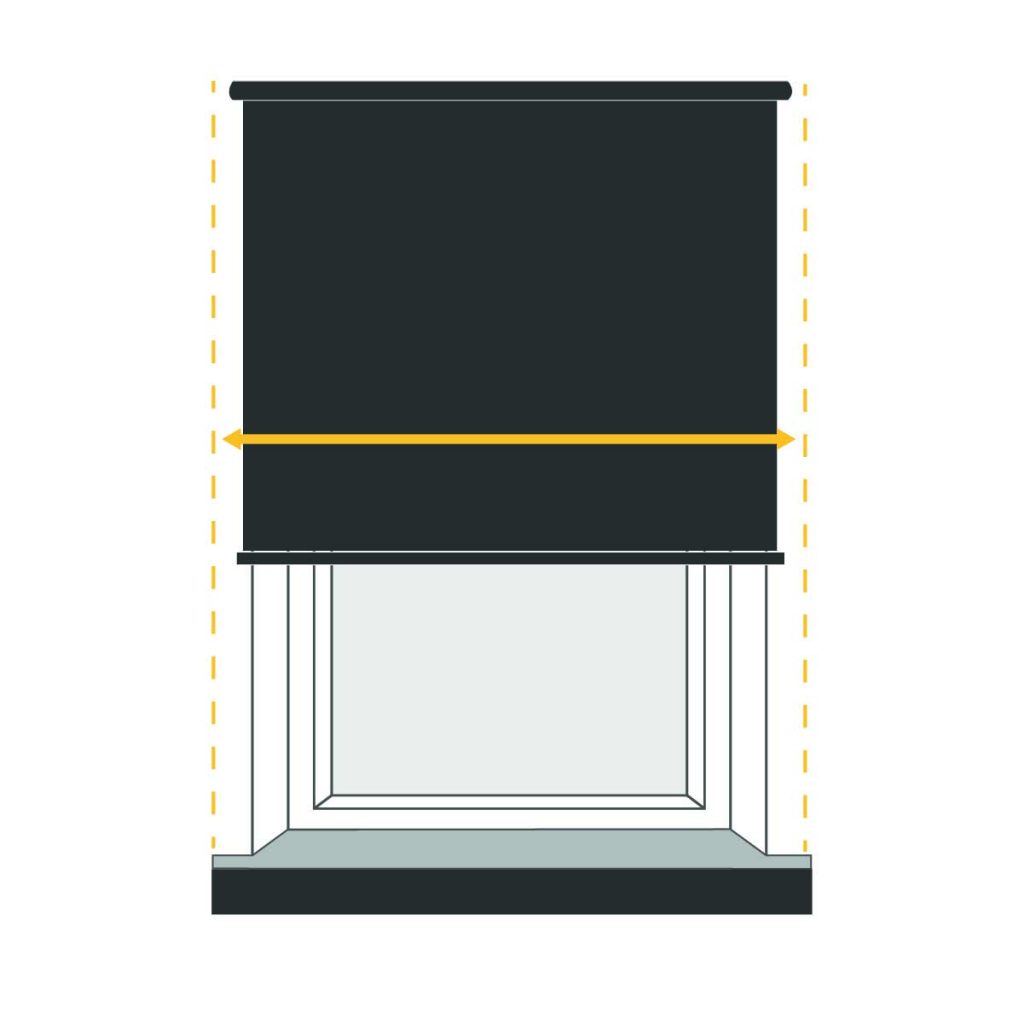
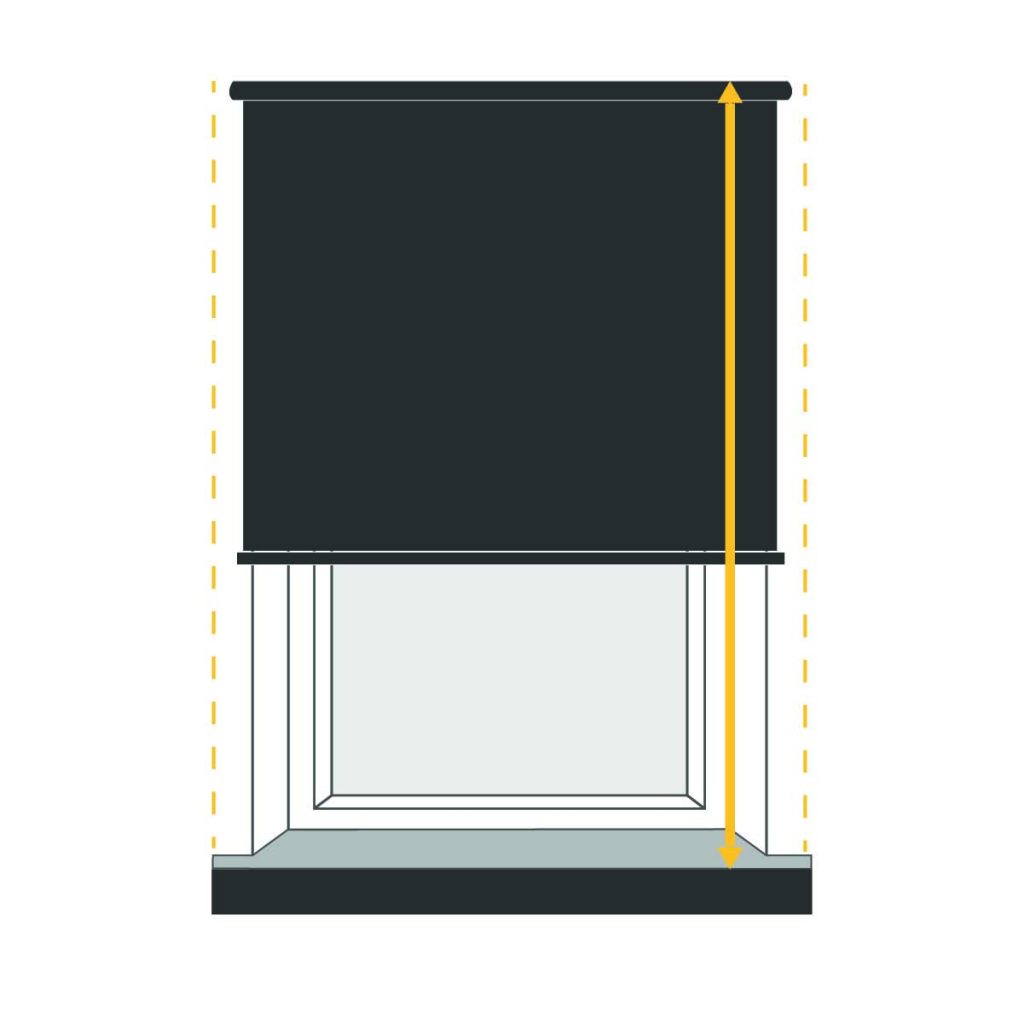
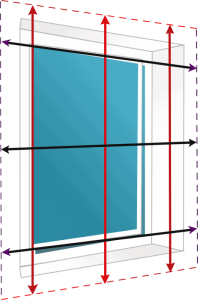
Measure the Width: Decide if you want to use an inside mount or an outside mount. Measure the distance from the two outermost points of the window frame, or the area you intend to cover. This measurement should be taken from side to side. Measure from the top of the window frame to the window sill, or from the desired starting point of the blind to where you want it to end. This measurement should be taken from top to bottom.
Measure the Height: Measure above the window first to make sure you have at least 2″ of flat space on the molding or wall. Next, measure the width you want covered. Blinds.com recommends at least 1.5″ of overlap on each side of the window for blinds and shades, and 2″ of overlap on each side for solar or roller shades and vertical blinds. The extra width provides more privacy and light blockage. As always, record your measurements down to the nearest 1/8 inch.
Measure the Depth:Measure the height of each window from the mark you just made to where you want the bottom of your window treatment to rest. Consider if you want your window treatment to extend to the sill or lower. If you have a protruding window sill, it is recommended that it be your bottom placement. Be aware of obstructions such as doorknobs or molding. If you have obstructions, spacer blocks or extension brackets are available to help your blind or shade extend far enough to avoid protrusions.
Measure the width of the window at the top, middle, and bottom. Use the narrowest measurement to ensure a proper fit. For outside mount, add 1.5 to 3 inches on each side of the window to ensure full coverage.
Measure the height from the top of the window frame to the window sill or where you want the blind to end. For outside mount, add 1.5 to 3 inches above and below the window frame for complete coverage.
Blinds
Measuring for your new blinds is easier than you might think! All you have to do is follow our simple tips, double-check everything you do, and set aside some time to do it. Happy measuring!.
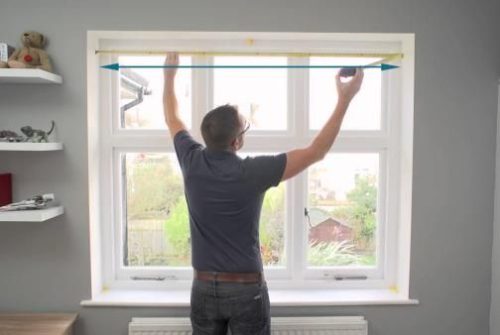
Top Measurement: Start by measuring the width of the window opening at the top, from one side of the frame to the other.
Middle Measurement: Measure the width at the center of the window.
Bottom Measurement: Finally, measure the width at the bottom of the window opening.
Standard Windows
Recess fitting
Measure the full width and height of the recess [the size of the hole if you like] and we will make the appropriate deductions to ensure a perfect fit.
- Measure in 3 places for both the width and the drop. For the width, compare the measurement at the top of the recess with the smallest of the measurements you’ve taken – if the difference between those is less than 25mm, use the measurement at the top of the recess. If it is not, use the smallest
- Don’t make any deductions, we’ll deduct from the width to ensure your blind fits perfectly (3mm for standard & double rollers, 10mm for Enjoy & Illusion).
- Use a metal tape measure, cloth ones can stretch and give you inaccurate measurements
Exact fitting
Measure the full width and height of the recess and add a little extra to the top and to each side, and we’ll make the blind to the size you specify with no deductions.
- Use a metal tape measure – fabric ones can stretch and give an inaccurate reading.
- Measure in centimetres and round each measurement to the nearest full cm
- Measure all windows individually even if they look the same size
- To minimize light leakage we recommend that the blind overlaps the window recess by at least 70mm at the top and 50mm each side
- The overlap at the bottom of the blind is a matter of personal choice but please take into account obstacles such as radiators
- Use a metal tape measure, cloth ones can stretch and give you inaccurate measurements.
Installation Depth by Blind Style
- Roller Blind Top-Fix (50mm)
- Roller Blind Face-Fix (70mm)
- Double Roller Blind Top-Fix (120mm)
- Double Roller Blind Face-Fix (105mm)
- 25mm Wood/Faux Wood (55mm)
- 35-38mm Wood/Faux Wood (65mm)
- 50mm Wood/Faux Wood (70mm)
- 63-65mm Wood/Faux Wood (80mm)
- 25mm Venetian Blind (30mm)
- 50mm Venetian Blind (70mm)
- Roman Blind (50mm)
- Vertical Blind (75mm)
- Enjoy / Illusion Roller Blinds (85mm)
- Pleated Blinds (With Cords) (45mm)
- Pleated Blinds (Cordless) (50mm)
- Pleated Blinds (DuoMax) (50mm)
Shutters
Measure Your Shutters
Measuring windows isn’t complicated and our measuring guides are super easy to follow If you are unsure at any stage just contact our team for advice. They can ‘mark up’ photos of your windows to show you exactly where to measure or simply point you in the right direction if you don’t know where to start.

Here’s exactly how our installation service works

Place Your Order
Start by choosing your favourite shutter style then select ‘Installed by Us’ before you start building your order online. You’ll need to enter your postcode just to check we have an installer in your local area. Please remember to attach a photo of your windows to your order to help us to assist you.
Check Measure
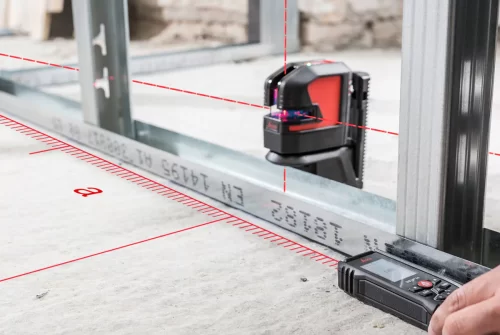
Once you’ve placed your order our team will give you a call to run through all of your order details, as we would with our DIY customers. After that we will let your local installer know that you are ready for your check measure appointment. They’ll call you to arrange a time to come round and measure your windows to double check the sizes on your order. After that you just need to confirm your order via the secure
link we’ll send via email
Build Your Order
We’ll start building your made-to-measure shutters at our specialist manufacturing facility. All of the components will be carefully cut to size, assembled, sprayed and finished. They will be carefully packed and shipped to our dispatch centre ready for your courier delivery.
Delivery Day
You’ll receive an email notification to let you know that your shutters are on their way. Once the courier has delivered your shutters all you need to do is give them a quick check over and call your installer to arrange your installation appointment.

Installation
Your installer will arrive to install your shutters. You’ll need to be present for the installation but don’t worry! They’ll do all of the hard work and leave you with stunning, professionally installed plantation shutters.
Curtains
Measuring for net curtains requires careful attention to detail to ensure a proper fit. Net curtains are typically used for privacy while still allowing light to enter the room. Use a metal tape measure, as cloth and plastic tape measures can bend and stretch and provide inaccurate measurements. Always check your measurements carefully. Here’s a detailed measuring guide to help you measure for net curtains accurately:
Measure the Width To measure the width of your net curtains, follow these steps:
Inside Recess Mounting:
- Measure the width of the window recess from wall to wall at the top.
- Take three measurements: at the top, middle, and bottom of the recess.
- Record the narrowest width measurement of the three.
- This final measurement is the width you’ll need for your net curtains.
Eyelet, Pencil Pleat & Pinch Pleat Curtains
Curtain poles
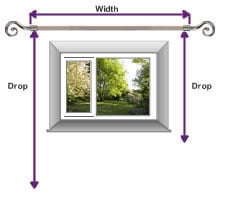
For a curtain pole simply measure the width of the pole between any finials or end caps, that is the width you should enter.


Curtain tracks
For a standard curtain track simply measure the full width of the track, that is the width you should enter.
Curtain tracks with overlap
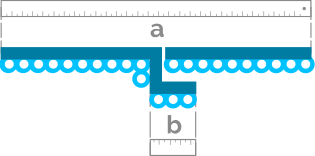
f your track has an overlap in the centre, measure the full width of the track (a) and the width of the overlap (b). Add the two together and that is the width you should enter.
Measuring the correct curtain drop
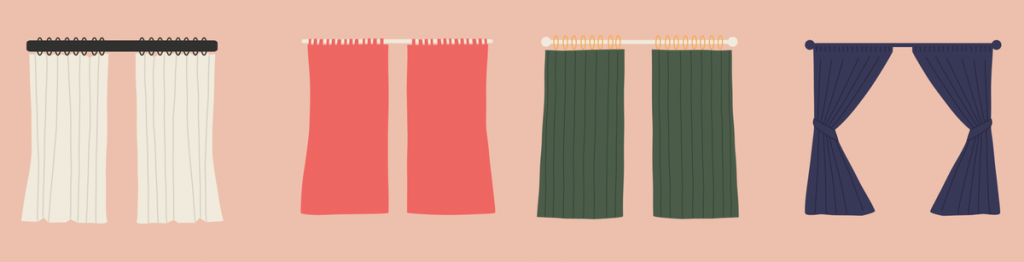
Our eyelet heading curtains will fit poles up to 30mm in diameter. Simply measure from the top of the pole to where you want the curtain to finish at the bottom. We will make the curtain with 3cm of fabric above the top underside of the eyelet where it sits on the pole. We add this automatically so simply measure from the top of your curtain pole
Once you have entered your curtain pole or rail width, we will calculate the amount of fabric required for your curtains. Some headings require more fullness or gathering than others so these headings will require more fabric which is reflected in the price of the curtains.